How to Choose the Right Accountant in Hawke's Bay: A 7-Point Checklist
Choosing the Right Accountant in Hawke’s Bay: A 7-Point Strategic Checklist
Key Takeaways
- Selecting a strategic partner helps navigate the low growth rates currently seen in the New Zealand small business sector.
- Accountant credentials and specialised local knowledge remain the benchmarks for quality advice.
- Transparent, fixed-fee pricing models provide certainty and help avoid unexpected administrative costs.
- Effective communication and the use of modern accounting software reduce the time spent on manual tax compliance.
Selecting the right accountant represents a strategic decision that impacts your long-term success. Many people view accounting as a simple box-ticking exercise for the Inland Revenue Department, yet the reality involves much more than just filing returns. In our experience, the relationship you build with your advisor can determine whether your business merely survives or actually thrives in the current economic climate.
Recent data underscores how central these professionals are to the New Zealand economy. Research shows that 8 in 10 businesses use accountants or bookkeepers to meet their tax responsibilities. Furthermore, the CPA Australia 2024–2025 Asia–Pacific Small Business Survey found that in New Zealand, accountants are the preferred source of business advice among small businesses. This preference places a significant responsibility on the advisor to provide more than just basic numbers.
1. Define Your Specific Requirements
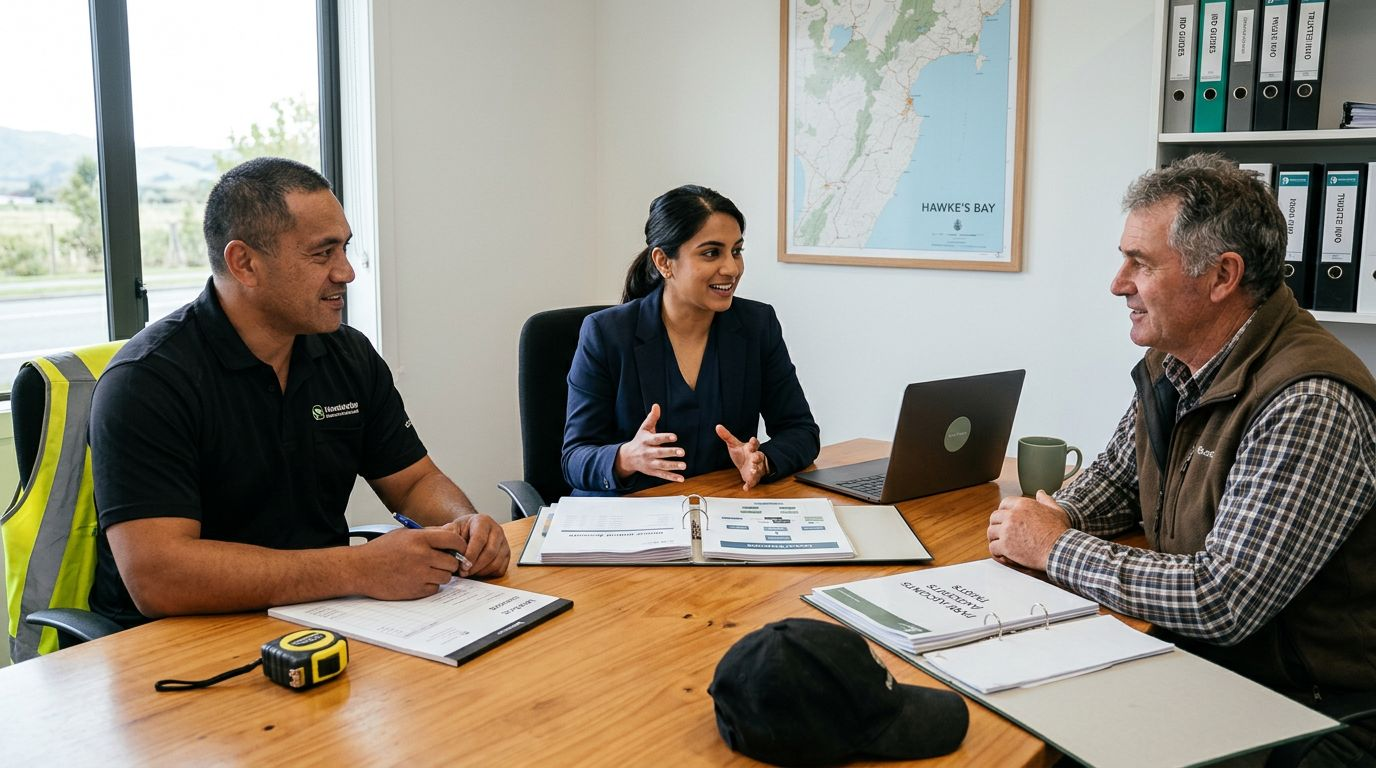
Every client brings a unique set of circumstances to the table. A tradie in Napier has different needs compared to a large-scale sheep and beef farmer in Central Hawke’s Bay. Before you start interviewing firms, identify exactly what you need help with right now. Are you looking for basic annual accounts, or do you require help with complex trusts and estate planning? We often see business owners struggle because they hired a generalist when they actually needed a specialist in property or rural accounting.
2. Verify Professional Credentials
New Zealand law allows almost anyone to call themselves an accountant. To protect your interests, you must check for recognised qualifications, and the alignment with a professional body such as Accountants & Tax Agents Institute of New Zealand (ATAINZ). These designations ensure the advisor adheres to strict ethical standards and undergoes continuous professional development. Working with a qualified professional ensures you stay compliant with critical IRD dates, such as the 31 March and 7 April deadlines that roll around every year.
3. Look for Strategic Growth Support
The current economic environment in New Zealand remains challenging for many small firms. The CPA Australia survey revealed that only 35.8 percent of New Zealand small businesses grew in 2024, which is significantly lower than the Asia-Pacific average of 64.1 percent. Looking ahead, just 47.4 percent of Kiwi small businesses expect to grow in 2025, compared to a 70.9 percent survey average.
These figures suggest that standard compliance is no longer enough. You need an advisor who understands how a strategic accountant can become your business growth engine in Hawke’s Bay by offering proactive advice on resilience and profitability. We believe a great accountant acts as a partner who looks through the windscreen at the road ahead, rather than just looking in the rearview mirror at what has already happened.
4. Evaluate Communication and the No Grey Areas Approach
Accounting involves complex legislation and jargon that can easily become confusing. You deserve an advisor who speaks your language and provides clear, straightforward answers. We call this a no grey areas approach, where the focus remains on telling it like it is so you can make informed decisions. During your first meeting, observe whether the accountant listens to your goals or simply talks at you. Our team provides a full spectrum of services ranging from taxation and payroll to strategic succession planning, all delivered with clarity in mind.
5. Assess Technology and Efficiency
Manual data entry consumes valuable time that you could spend growing your business. According to Xero, New Zealand businesses spent a median of 32 hours in 2024 solely on in-house tax compliance. The right accountant will encourage the use of cloud-based software to automate these tasks. We recommend looking for firms that are experts in accounting software solutions, as this allows for real-time collaboration and ensures your financial data is always up to date.
6. Demand Pricing Transparency
Unexpected bills are a common source of frustration in professional relationships. Modern accounting firms are moving away from hourly billing in favour of fixed-fee packages. This shift makes small business accounting predictable and stress-free by removing the fear of the clock ticking every time you pick up the phone. While costs can vary depending on the complexity of your affairs, you should always receive a clear, upfront explanation of the fees involved before any work begins.
7. Prioritise Local Hawke’s Bay Expertise
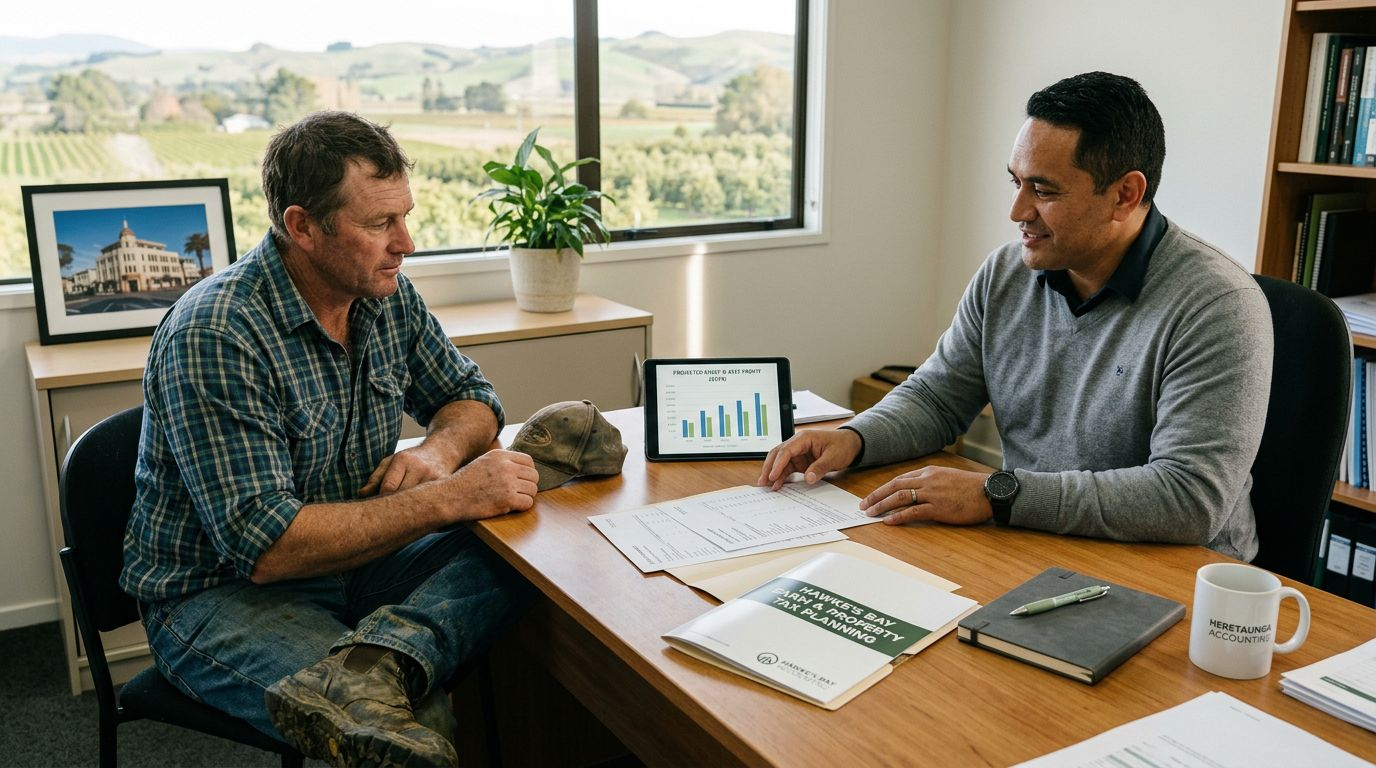
National firms often lack the granular understanding of our local economy. Hawke’s Bay has specific drivers, particularly in the primary industries and property sectors. For example, the June 2025 Situation and Outlook for Primary Industries report forecasts that sheep and beef farm profit before tax will increase by 89 percent in the coming season. This creates both opportunities and significant tax obligations.
A local expert understands the impact of a green drought or the pressure of high stock tallies at the Stortford Lodge saleyards. We provide specialised farm and property accounting in Hawke’s Bay because we know that generalist advice often misses the nuances of these industries. Whether you are navigating the rental market or managing a large orchard, local insight is an asset that cannot be replicated from an office in another region.
Making the Final Decision
Once you have worked through this checklist, the best way to test the fit is through a direct conversation. We suggest booking a meeting to discuss your goals and see if the chemistry feels right. Many firms, including ours, offer a free initial consultation to help you determine if the partnership will work long-term. This is your chance to ask about their experience with businesses similar to yours and to see if they truly understand the Hawke's Bay landscape.
With most New Zealand businesses already relying on accountants, the focus shifts from whether you need one to whether you have the right one for your specific goals. Taking the time to choose a proactive, strategic partner today will pay dividends for years to come. If you are ready to get your records in order, you might also find it helpful to read our guide on decoding NZ tax for Hawke’s Bay businesses and individuals, which explains the fundamentals of the local tax system.
Disclaimer
The information provided in this article is for general educational purposes only and does not constitute formal financial or accounting advice. Because every individual and business situation is unique, you should consult with a qualified professional before making any significant financial decisions or changes to your business structure.